
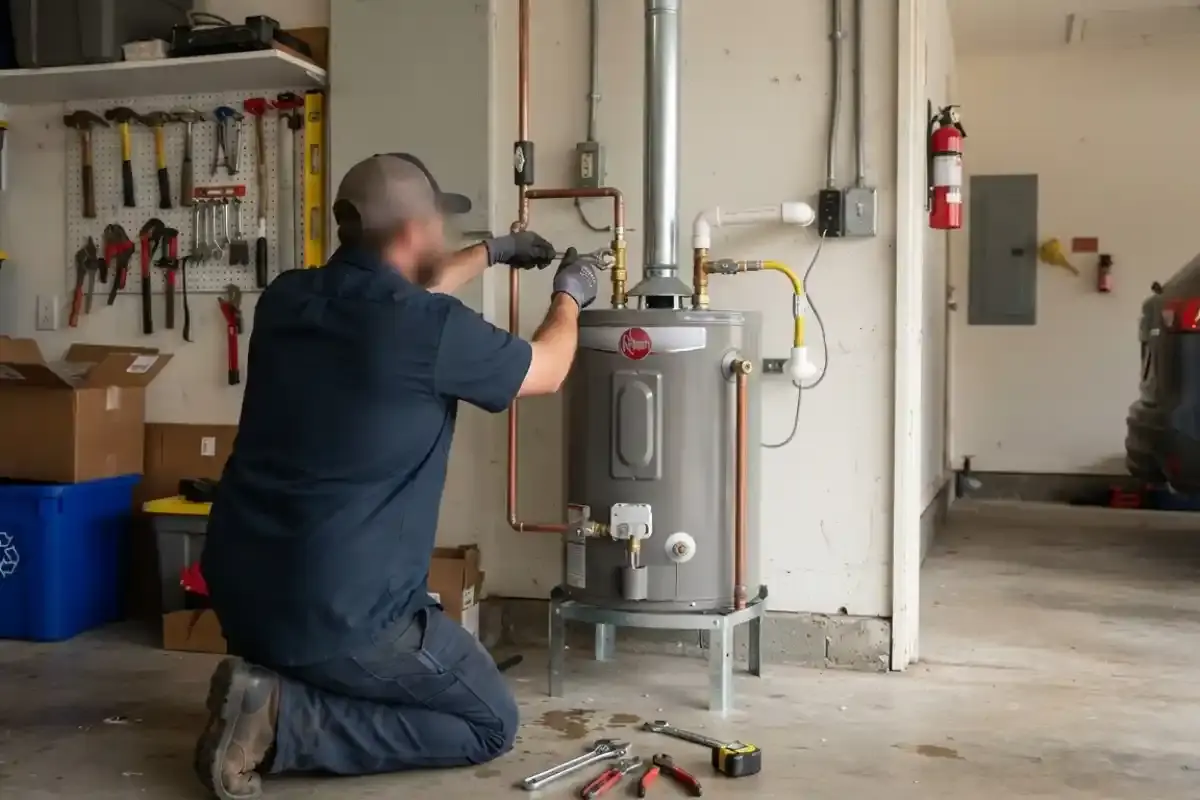
DIY Water Heater Installation: A Zephyrhills, FL Homeowner Guide
Installing a water heater yourself can be done, but it combines water, power or gas and a 100-pound tank. Here is what the job involves so you can decide honestly.
A water heater swap looks simple from the outside. Disconnect the old tank, set the new one and connect the lines. Under that is a long list of details that decide whether the install is safe: the venting on a gas unit, the relief valve and discharge pipe, the electrical connection and the drain pan.
Some homeowners handle it well. Others find out about a missed step when something leaks or fails inspection.
If you want it done by a professional, our water heater installation crews book same-day appointments when the schedule allows, and our emergency line at (813) 471-5608 is open 24/7 for a failed tank.
What the job includes
- Shut off the supply. Turn off power or gas and close the cold water valve.
- Drain and disconnect. Drain the old tank, disconnect the supply lines, the vent and the discharge line.
- Move the old unit. A full tank is heavy and a drained one is still bulky. Use a dolly and a helper.
- Set the new unit. Place it on a drain pan on a level, solid surface with required clearances.
- Connect water. Use flexible connectors or pipe, and add a shutoff valve and a dielectric fitting if the pipes are different metals.
- Install the relief valve and discharge pipe. The temperature and pressure relief valve is a safety device and needs a proper discharge line.
- Connect power or gas and vent. Electric heaters need a correct circuit. Gas heaters need a gas connection, a leak test and a correct vent.
- Fill and test. Fill the tank with a hot tap open before power or gas is on, then check for leaks.
Where DIY installs go wrong
Common mistakes
- Turning on power before the tank is full, which burns out electric elements.
- A missing or undersized relief valve discharge line.
- A gas leak at a threaded joint that was never tested.
- Incorrect venting that lets exhaust gases enter the house.
- No drain pan, so a future leak damages the floor.
- Wrong wire size or breaker for the electric heater.
Gas and electrical work carry real risk. A gas leak or a bad vent can be dangerous, and an electrical error can start a fire. If you are not sure about any of these, call a professional. Installing a unit that fails inspection or voids a warranty can cost more than hiring it done.
DIY or hire a plumber
| Situation | DIY realistic? | Why |
|---|---|---|
| Electric tank, same size, same spot | Possible for a skilled homeowner | Mostly plumbing and a careful electrical hookup |
| Gas tank, same spot | Risky | Gas lines and venting need testing |
| Fuel change or new location | Not advised | New gas, electrical or venting work is required |
| Tankless upgrade | Not advised | Large electrical or gas changes |
| Attic or tight closet | Difficult | Moving a tank is hard and unsafe |
Permits and warranty
Water heater replacement usually needs a permit and an inspection. Manufacturers often require installation to follow their instructions, and a warranty claim can be denied if it did not. Ask the retailer and the manufacturer what they require. If you hire a plumber, they can pull the permit for you.
Hidden extras that change the budget
A water heater swap can reveal trouble: a seized shutoff valve, a corroded fitting, an old expansion tank or a rotted closet floor. Plan for the possibility that something extra needs replacing. If the water is hard, ask about water softener and filtration, since scale shortens heater life.
If your heater has failed and you need hot water tonight, a same-fuel swap by a plumber is usually the fastest route. Read our water heater replacement page for how that visit works.
A fair way to decide
Ask yourself three questions. Have I worked with this fuel or this voltage before? Do I have a helper and a way to move a heavy tank? Am I willing to pull a permit and pass an inspection? If the answer to any is no, hire it out. The cost of a plumber is often lower than the cost of fixing a mistake.
If you decide to hire out only part of the job, many plumbers will do the gas or electrical connection and leave the rest to you. Ask before you start, so the work is not left half done at a bad moment.
Water heater installs fall under the International Plumbing Code (IPC), the National Electrical Code (NEC) for electric units and the fuel gas code for gas units. Manufacturer instructions add requirements, and a missed one can void a warranty.
A local note on permits and garages
Ask the City of Zephyrhills building department, or Pasco County for an address outside city limits, about permit and inspection requirements for water heater work. Rules and fees vary, and an unpermitted install can create problems when you sell.
In Florida homes the heater is often in a garage or closet on a slab. Check that the heater has a drain pan and that the relief valve discharge line ends where a leak would be seen.
DIY water heater questions from Zephyrhills homeowners
Can a homeowner install a water heater in Florida?
Owners may be allowed to do some work on their own home, but permit and inspection rules apply. Ask your local building department.
How long does an install take?
A same-fuel swap by a plumber often takes a few hours. Fuel changes and venting work take longer.
Do I need an expansion tank?
Many systems with a check valve or a pressure regulator need one. A plumber can tell you what your system requires.
What if I buy the heater myself?
We can install one you bought. Tell us the model so we can check the connections.
Do you install water heaters in Wesley Chapel?
Yes. We dispatch to Wesley Chapel from Zephyrhills.
Want a plumber to install it?
The line is open 24/7 for emergencies. Tell the dispatcher what you see and what you have already shut off.