
EcoSmart ECO 18 Tankless Water Heater for Zephyrhills, FL Homes
The ECO 18 is a large electric tankless heater. Whether it fits your house depends less on the unit than on your electrical panel, your fixtures and your incoming water.
The EcoSmart ECO 18 is an 18 kilowatt electric tankless water heater, which means it heats water on demand with electric elements instead of storing it in a tank. People search for it by model number because it appears in many price comparisons. Before you buy any electric tankless unit this size, there are three things to check: the electrical service, the flow you need and the incoming water temperature.
We install and service tankless units in Zephyrhills, and our tankless water heater page covers gas and electric options. Call (813) 471-5608 to talk through a specific model.
Start with the electrical panel
An 18 kW electric heater draws a very large load. Many houses do not have spare capacity on the main panel to carry it, and some need a service upgrade. The exact breaker and wire sizes are in the manufacturer's installation manual, and they must match it. An electrician or plumber should check the panel before you commit to the purchase, not after it arrives.
Electrical questions to answer first
- What is the main service rating of the home, and how much of it is already used?
- Is there room in the panel for the breakers the manual specifies?
- Can wire of the required size be run from the panel to the heater location?
- Does the home already have a gas line, which may make a gas unit simpler?
- Will a permit and inspection be required for the electrical work?
How the flow math works
A tankless heater does not store hot water, so its limit is how much water it can heat per minute. That depends on its power and on how much it has to raise the temperature. Warmer incoming water means less work for the unit. Florida groundwater is warmer than in northern states, so the temperature rise needed is smaller, but cool winter mornings still cut into the flow.
Sizing questions in plain terms
| Question | Why it matters | How to answer it |
|---|---|---|
| How many fixtures run at once? | Two showers plus a dishwasher use more than one shower | List your peak use, such as a morning rush |
| How cold is the incoming water in winter? | A colder feed lowers the flow the unit can heat | Measure at a tap on a cold morning |
| What does the spec sheet say? | It shows flow at set temperature rises | Read the flow chart for your rise |
| Is one unit enough? | Large homes often need two | Ask for a plan before you buy |
What an install involves
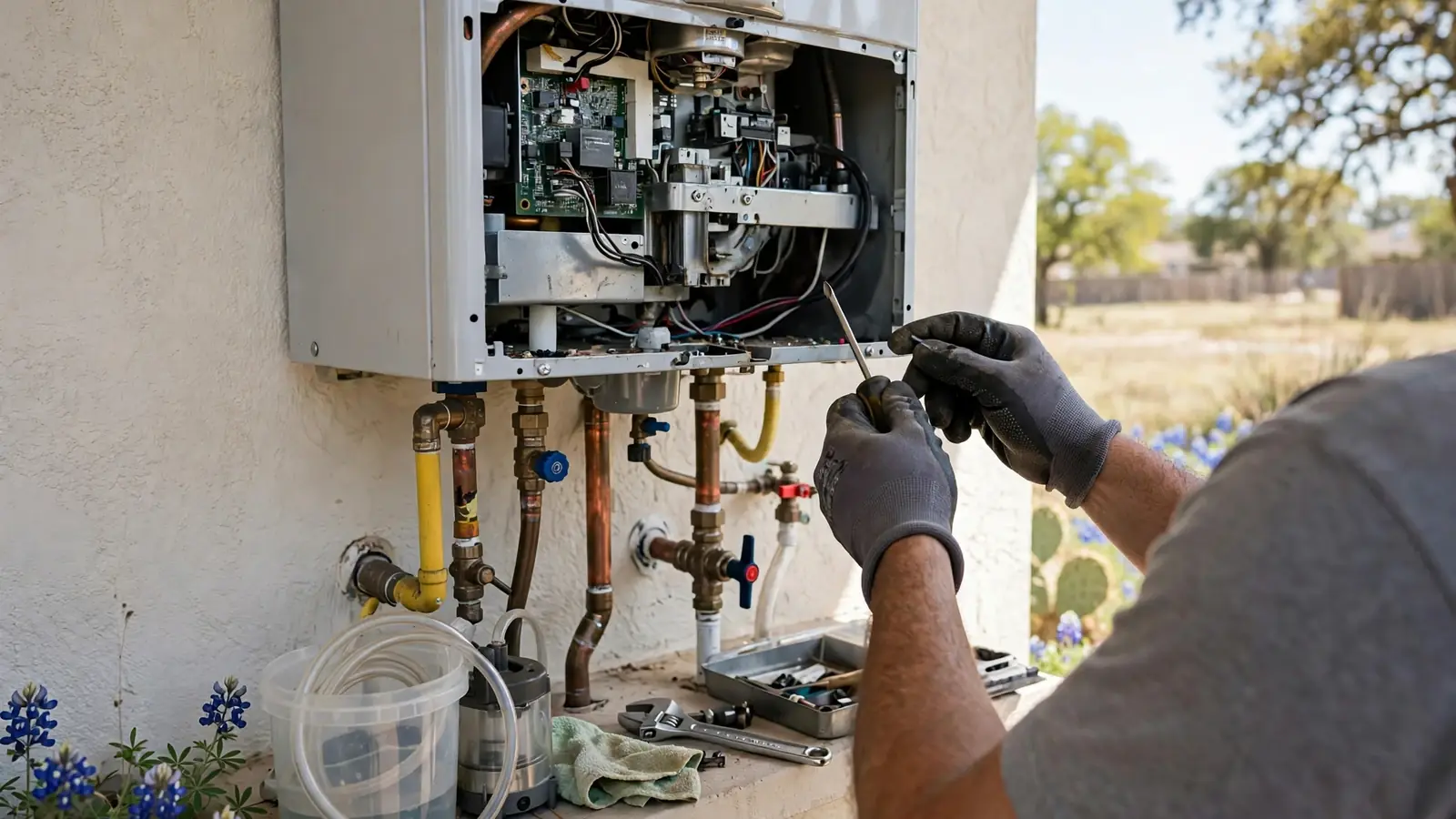
A tankless install replaces the tank, mounts the unit on a wall, connects hot and cold, adds isolation valves for flushing, runs the electrical circuit and checks the temperature at the fixtures. The old tank is removed and the space may need patching. It is a longer job than a tank swap, and a permit is usually part of it.
Isolation valves matter more than most buyers expect. Mineral scale builds inside a tankless heat exchanger, and the valves let a plumber flush it without cutting pipe. If your water is hard, scale is a long-term cost. Testing your tap tells you how serious that is, and our water softener and filtration page explains the options.
Electric tankless versus a tank
A tank heater keeps a reserve ready and loses a little heat all day. A tankless unit heats only when you open a tap and takes up little space. The trade-offs are the electrical demand, the upfront cost of the install and a flow limit when many fixtures run together. For some homes, a heat pump tank or a gas tankless unit is the better fit.
If your current heater is failing, water heater replacement with a similar tank is the fastest path back to hot water. A tankless upgrade is better done as a planned project.
Warranty and installation details
Manufacturers set installation rules, and warranty coverage can depend on following them. Read the manual, keep the receipt and ask the installer to note the settings. If you buy online and install it yourself, ask the manufacturer what their warranty requires.
Questions to ask a plumber about any electric tankless unit
A plumber can look at your house in one visit and answer questions the product page cannot. The list below is the one we would bring to a job site.
What to ask before buying
- Can my main panel carry the load, or does the service need an upgrade?
- Where will the unit mount, and is there room for the clearances in the manual?
- Which fixtures will run at the same time, and will one unit keep up?
- How will I flush the heat exchanger, and are isolation valves included?
- What permits and inspections apply to my address?
- What happens to the old tank, and who removes it?
Ask for the answers in writing. A written scope helps if the electrical work grows and protects the warranty if the manufacturer later asks how the unit was installed.
The NEC governs wire and breaker sizing for an electric tankless heater, and the manufacturer's installation manual sets the minimums. Both apply to the ECO 18 or any similar unit, and an inspector may check them.
A local note on power and permits
In Zephyrhills and unincorporated Pasco County, the City of Zephyrhills or Pasco County permit offices decide what inspections a tankless install needs. Ask before you buy, since a service upgrade can change the budget and the schedule.
Many Wesley Chapel and Zephyrhills homes are on slabs with the heater in the garage. That is an easy place for a wall-mounted tankless unit, but check the garage wall space and the path for the electrical run.
ECO 18 questions from Zephyrhills homeowners
Can any Zephyrhills house run an ECO 18?
Not every house can. The electrical service and panel capacity decide. Have the panel checked before buying.
Is the ECO 18 enough for a whole house?
It depends on your fixtures and your incoming water temperature. The manufacturer's flow chart is the place to check, and a large home may need more than one unit.
Does an electric tankless heater need maintenance?
Yes. Scale can build up inside, so flushing and cleaning the inlet screens on a schedule is part of ownership.
Can you install a unit I bought myself?
Often yes. Tell us the model, and we will check the electrical, the plumbing and the location before the visit.
What if I want gas instead?
A gas tankless unit needs a gas line and venting, and the choice depends on what the home already has. See our tankless water heater page.
Ready to plan a tankless install?
The line is open 24/7 for emergencies. Tell the dispatcher what you see and what you have already shut off.