
Plumbing Costs for a New House: A Zephyrhills, FL Homeowner Guide
Plumbing in a new house is priced by fixtures, layout and the choices you make. Here is what moves the number and what to ask before you sign.
Plumbing a new house is a series of decisions that fix your costs for decades. The big ones are made before a wall closes, such as where the water heater goes and how many bathrooms the house has. We do not quote a fixed price here, because prices change and every design is different. This guide shows what moves the cost and where homeowners can make smart choices.
For repair and replacement work on existing plumbing, call (813) 471-5608. Our plumbing installation page covers fixtures and lines we install for homeowners, and we can help you review a builder's plumbing scope.
The main cost drivers
What affects the plumbing price
| Factor | How it changes the cost | What to ask |
|---|---|---|
| Number of bathrooms and fixtures | More fixtures mean more pipe, labor and parts | How many fixtures are in the plan? |
| Foundation type | Slab homes need drains and supply planned before the pour | Where are the drains and supply lines routed? |
| Pipe material | PEX, CPVC and copper differ in price and labor | What is the supply pipe and who warrants it? |
| Water heater choice | Tank, tankless and heat pump units differ widely | What type, and what are the install needs? |
| Fixture grade | Builder-grade versus upgraded fixtures | Which fixtures are included? |
| Layout | Stacked bathrooms are cheaper than spread-out ones | Can bathrooms share walls? |
Rough-in and finish
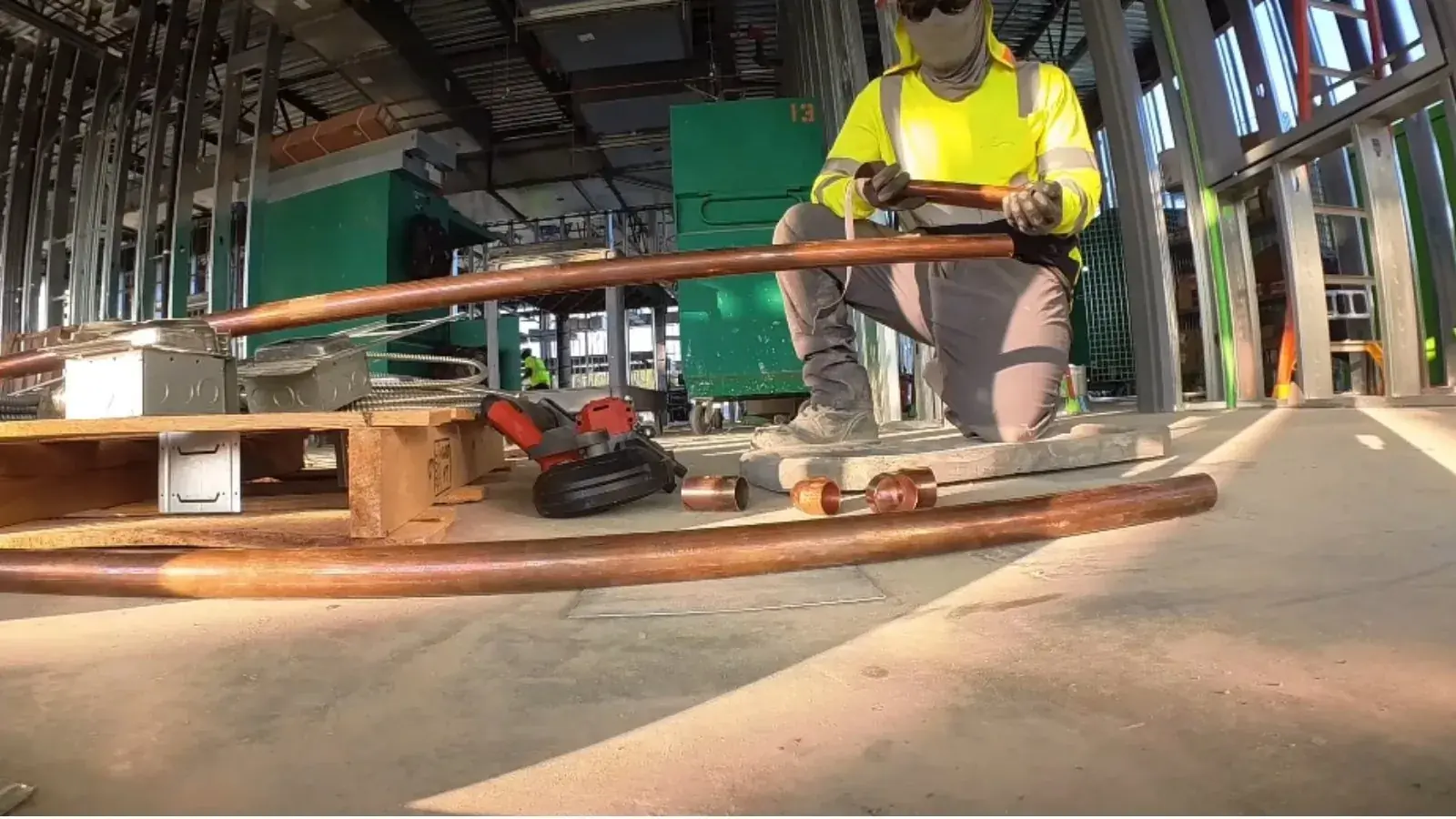
Plumbing happens in two stages. Rough-in is the pipe inside walls and under the slab, done before drywall. Finish is setting the toilets, sinks, faucets and the water heater after the walls are up. Most of the labor and pipe cost is in the rough-in. Changes after rough-in are expensive, since opening a wall or breaking a slab costs far more than moving a line on a drawing.
Questions to ask your builder
Before you sign the plumbing scope
- What is the water heater type, size and location, and is there a drain pan and discharge line?
- What supply pipe material is used, and what does the warranty say?
- Are shutoff valves provided at every fixture?
- Is there a cleanout on the main drain, and where is it?
- Is there a hose bib on each side of the house, and do they have vacuum breakers?
- Is a pressure regulator installed, and what is the pressure set to?
Upgrades worth discussing
A few additions are cheap during construction and costly afterward. A drain cleanout in an accessible spot makes later sewer cleaning easier. Isolation valves on a tankless heater make flushing simple. An extra hose bib, a laundry valve box or a supply line for a future bathroom are small items now and large ones later. Our sewer line cleaning page explains why a good cleanout matters.
Water treatment is another. If your tap water test shows a problem, plumbing a softener or filter loop during construction avoids cutting pipe later. See water softener and filtration.
Buying a new house instead of building one
A newly built house still deserves a plumbing look before closing. A water pressure test, a check of the water heater's installation and a camera look at the sewer line can catch construction mistakes while the builder's warranty is active. Photograph any problem and send it in writing.
What a plumber can do for you
A plumber can read the plan, point out missing items and price changes before they are built. If you want a second opinion on a builder's scope or a quote for an add-on, call during the day and ask for an appointment.
How to compare two plumbing quotes
Two quotes can differ by more than their total. One may include fixtures and the other may not. One may list the water heater model and the other may only say tank. Lay the quotes side by side and compare what each covers, not just the bottom line.
Items to compare line by line
- Fixtures included and who supplies them.
- Water heater type, size and warranty.
- Pipe material and the length of the warranty.
- Permits, inspections and who pulls them.
- Cleanouts, shutoff valves and hose bibs.
- What counts as a change order and how it is priced.
New construction plumbing is built to the Florida Building Code, Plumbing, which is based on the International Plumbing Code (IPC), and is inspected at rough-in and at final. Ask your builder for the inspection records.
A local note on permits and growth
New homes around Zephyrhills and Wesley Chapel are built under permits from either the City of Zephyrhills or Pasco County, depending on the address. Ask which applies to your lot, and keep copies of the permit and the final inspection.
Wesley Chapel grew from about 5,691 residents in 2000 to 64,866 in 2020 according to census counts, which means builders there have been working at scale for years. Ask your builder which plumbing contractor does the work and what the warranty covers.
New house plumbing questions from Zephyrhills homeowners
Is plumbing a large part of a new home budget?
It is one of several major trades. The share depends on the design and the fixtures. Ask your builder for the plumbing line item.
Can I upgrade fixtures after the house is built?
Yes, but changes after the walls close are costlier. Decide before rough-in when you can.
Should I add a water softener during construction?
Test your tap first. If treatment is needed, plumbing for it during construction is easier than adding it later.
Who warrants the plumbing in a new house?
Usually the builder and the plumbing contractor. Read the warranty terms and keep the paperwork.
Do you work on new homes in Wesley Chapel?
We focus on repair, replacement and installation for homeowners. Call to discuss your project and we will tell you what we handle. See Wesley Chapel.
Planning plumbing work?
The line is open 24/7 for emergencies. Tell the dispatcher what you see and what you have already shut off.